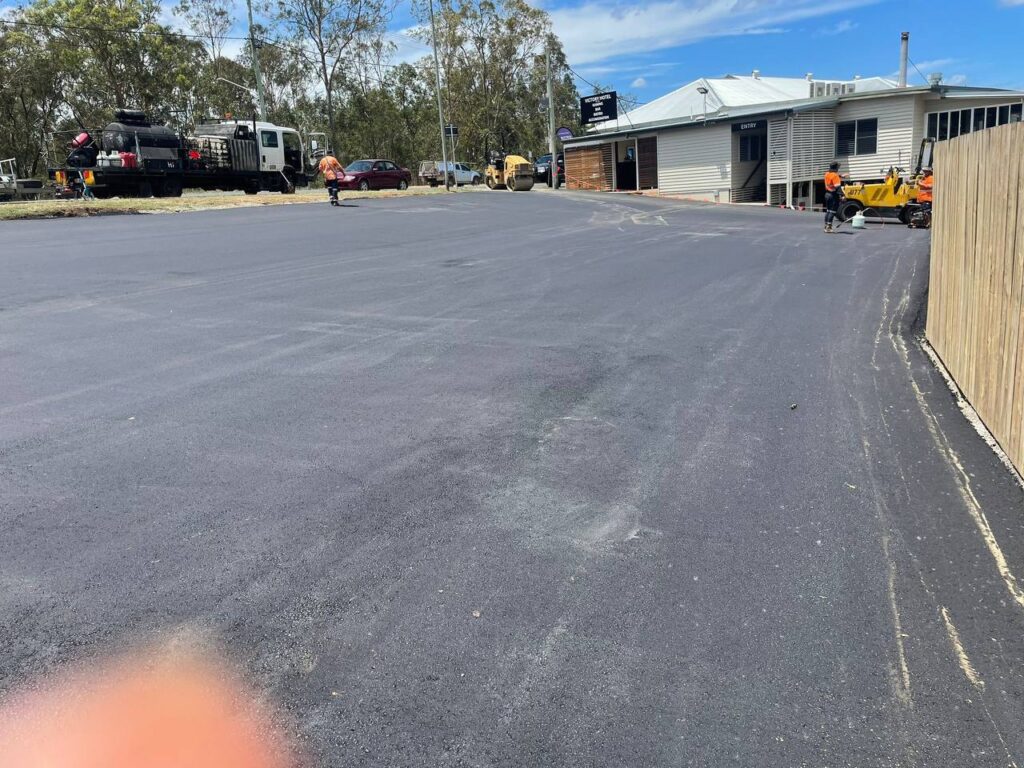
Asphalt surfaces rarely deteriorate all at once. More commonly, a driveway, car park, access road or commercial traffic area begins showing gradual signs of wear: a few cracks appear, patches become more frequent, the surface becomes rougher and water starts collecting in areas that previously drained effectively. Individual repairs can address many of these problems for a time, but eventually it may make more sense to consider the condition of the entire surface.
For properties in Redcliffe, QLD, full asphalt resurfacing can be an effective way to renew an ageing pavement when deterioration has become widespread but the underlying structure remains suitable. Knowing when resurfacing is appropriate — and when more extensive work may be required — is essential to achieving a durable result.
What Does Full Asphalt Resurfacing Mean?
Asphalt resurfacing generally involves preparing an existing pavement and installing a new asphalt layer over it. Unlike isolated patching, which targets individual defects, full resurfacing treats a much larger or complete paved area.
Before new asphalt is installed, the existing surface must be assessed and appropriately prepared. Damaged sections may require repairs, levels may need correcting and drainage issues should be addressed.
The objective is to provide a renewed wearing surface while making use of the existing pavement structure where it remains serviceable.
Resurfacing Is Not the Same as Complete Reconstruction
This distinction is important.
Full resurfacing does not necessarily mean removing the entire pavement and rebuilding it from the ground up. If the foundation and lower pavement layers remain stable, they may continue providing suitable support for a new asphalt surface.
If significant structural failure exists underneath, however, simply placing fresh asphalt over the problem is unlikely to provide a satisfactory long-term solution.
Widespread Surface Wear Can Indicate It Is Time
Normal asphalt maintenance often focuses on isolated deterioration. When wear begins affecting most of the pavement, continually repairing individual sections may become less practical.
Signs of widespread deterioration can include:
- Numerous cracks across the surface
- Rough or weathered asphalt
- Multiple patched sections
- Loose or deteriorating surface material
- Increasing numbers of minor defects
- An inconsistent driving surface
When these issues are present across much of an otherwise structurally suitable pavement, resurfacing may be worth considering.
When Repairs Are Becoming Too Frequent
Patching is an important maintenance technique and remains appropriate when damage is genuinely localised.
The situation changes when one repair is followed by another nearby.
Look at the Whole Surface
If an asphalt area contains numerous repairs of different ages, it may indicate that the wearing surface as a whole is deteriorating.
Property owners may notice:
- New cracks developing around older repairs
- Potholes appearing in previously unaffected sections
- Multiple areas requiring attention
- Increasingly uneven transitions between patches
- Repairs becoming a regular maintenance requirement
At this point, assessing the entire pavement can provide more useful information than continuing to view every defect independently.
Extensive Cracking Deserves Attention
Cracking is one of the clearest signs of asphalt deterioration, but the type and extent of cracking matter.
One small crack does not automatically justify resurfacing. Widespread cracking across a substantial proportion of the pavement, however, suggests that the upper surface may be losing its integrity.
Cracks also allow moisture to reach lower pavement layers. Leaving extensive cracking untreated can therefore allow deterioration to progress beyond the wearing surface.
The Cause of Cracking Must Be Understood
Resurfacing should not simply hide cracks without determining why they developed.
If cracking is caused primarily by ageing and surface wear, resurfacing may be appropriate after suitable preparation. If cracks are associated with significant movement or foundation failure, deeper corrective work may be necessary.
The Surface Has Become Rough or Uneven
A gradual decline in ride quality is another reason to investigate resurfacing.
Asphalt can lose its smooth, consistent finish through years of traffic and environmental exposure. Drivers may begin noticing increased vibration, rough sections or minor irregularities across the pavement.
For commercial and shared traffic areas, deteriorating ride quality can also affect how practical and presentable the site feels to users.
Where the underlying pavement remains sound, resurfacing can restore a more consistent driving surface.
Recurring Potholes May Point to Wider Deterioration
An individual pothole can often be repaired effectively. Multiple potholes developing across an ageing asphalt area require closer investigation.
Potholes can result from moisture penetration, pavement weakness and repeated traffic loads. If they continue appearing across different sections, the problem may no longer be isolated.
Resurfacing may form part of the solution when the deterioration is concentrated in the upper pavement layers.
However, soft areas or repeated failures in the same locations may indicate that the underlying pavement also needs attention before resurfacing occurs.
Changes in Drainage Should Be Investigated
Water pooling where it did not previously collect can indicate that pavement levels have changed.
Traffic loads, settlement and surface deformation can create depressions that hold rainfall. Standing water can then contribute to further deterioration if it reaches cracks or weakened areas.
Before resurfacing, drainage should be considered carefully.
Correcting levels during preparation can help restore effective runoff, but significant drainage problems should be addressed rather than simply covered with new asphalt.
When Appearance and Function Have Both Declined
Surface appearance alone is not normally enough to determine whether resurfacing is required. Asphalt naturally changes in colour and texture as it ages.
When visual deterioration occurs alongside functional problems, however, resurfacing becomes more relevant.
An ageing pavement may have:
- Numerous patches
- Widespread cracking
- Rough areas
- Worn edges
- Surface irregularities
- General material deterioration
A new asphalt layer can provide a more uniform appearance while restoring the functional wearing surface underneath vehicle traffic.
Why the Condition of the Base Is Critical
One of the most important questions before resurfacing is whether the existing pavement still provides adequate structural support.
Asphalt performs best when installed over a stable foundation. If the base is moving, saturated, severely weakened or inadequately compacted, new asphalt above it can eventually reflect those problems.
A professional assessment should therefore look beyond what is visible.
At Redcliffe Surfacing Solutions, important considerations include:
- Existing pavement stability
- Depth and extent of deterioration
- Areas of settlement or movement
- Drainage performance
- Traffic requirements
- Condition of previous repairs
Understanding these factors helps determine whether full resurfacing is appropriate or whether sections require more substantial preparation first.
Resurfacing Can Extend the Useful Life of Existing Pavement
One of the main advantages of resurfacing is that it can make productive use of pavement layers that remain structurally suitable.
Instead of waiting until deterioration reaches the foundation, resurfacing at an appropriate stage can renew the wearing surface and provide additional protection to the pavement underneath.
This can help:
- Restore a smoother driving surface
- Improve overall pavement consistency
- Reduce widespread surface defects
- Protect the existing pavement
- Provide a renewed surface for continued traffic
Timing matters. Resurfacing is generally most useful while there is still a sound pavement structure worth preserving.
Preparation Determines the Quality of the Result
A successful resurfacing project involves considerably more than laying new asphalt over an old road.
Preparation may involve:
Repairing Failed Areas
Localised structural defects should be corrected before the new surface is installed.
Correcting Levels
Depressions and irregularities may need attention so they are not simply reproduced in the finished pavement.
Addressing Drainage
Water should be able to leave the pavement effectively rather than becoming trapped in low areas.
Preparing the Existing Surface
The old pavement needs to be appropriately prepared so the new asphalt layer can perform as intended.
Skipping necessary preparation can compromise the benefit of resurfacing regardless of the quality of the new asphalt.
When Might More Than Resurfacing Be Needed?
Full resurfacing is not designed to disguise major structural failure.
Signs that additional pavement work may be required include:
- Extensive deep deformation
- Large areas of unstable pavement
- Severe settlement
- Persistent soft spots
- Significant base failure
- Major unresolved drainage problems
These conditions should be assessed individually. Some areas may require reconstruction while other sections of the pavement remain suitable for resurfacing.
A tailored approach is often more appropriate than assuming the entire site requires exactly the same treatment.
Choosing the Right Time to Resurface
Waiting until an asphalt surface has completely failed can limit the effectiveness of resurfacing. On the other hand, resurfacing a pavement that only has a few minor defects may be unnecessary.
The ideal point is generally when deterioration has become sufficiently widespread that repeated local repairs are no longer addressing the overall condition, while the pavement underneath remains capable of supporting a renewed surface.
This is why condition-based assessment is more useful than deciding according to surface age alone.
Professional Asphalt Resurfacing in Redcliffe, QLD
Every asphalt surface deteriorates differently depending on construction, drainage, traffic and ongoing maintenance. A car park experiencing frequent vehicle movements will not necessarily develop the same problems as a private access road.
Redcliffe Surfacing Solutions assesses asphalt surfaces in Redcliffe, QLD, with these differences in mind. By looking at both visible deterioration and the pavement supporting it, an appropriate resurfacing approach can be recommended without automatically replacing sections that remain serviceable.
Conclusion
Full asphalt resurfacing is worth considering when deterioration has become widespread across the wearing surface, repairs are becoming increasingly frequent, cracking is extensive or the pavement has become noticeably rough and inconsistent.
The condition beneath the surface remains just as important. Resurfacing works best when the existing pavement still provides a stable foundation, with localised failures and drainage problems addressed during preparation.
For property owners and businesses in Redcliffe, QLD, having an ageing asphalt surface assessed before deterioration becomes severe can help identify the most appropriate time to act. If your road, driveway, car park or access area is showing widespread signs of wear, Redcliffe Surfacing Solutions can assess its condition and advise whether asphalt resurfacing is a suitable next step.
Call us on: 07 3113 9873
Click here to find out more about Redcliffe Surfacing Solutions
Click here to complete our contact form and see how we can help with your driveway needs.