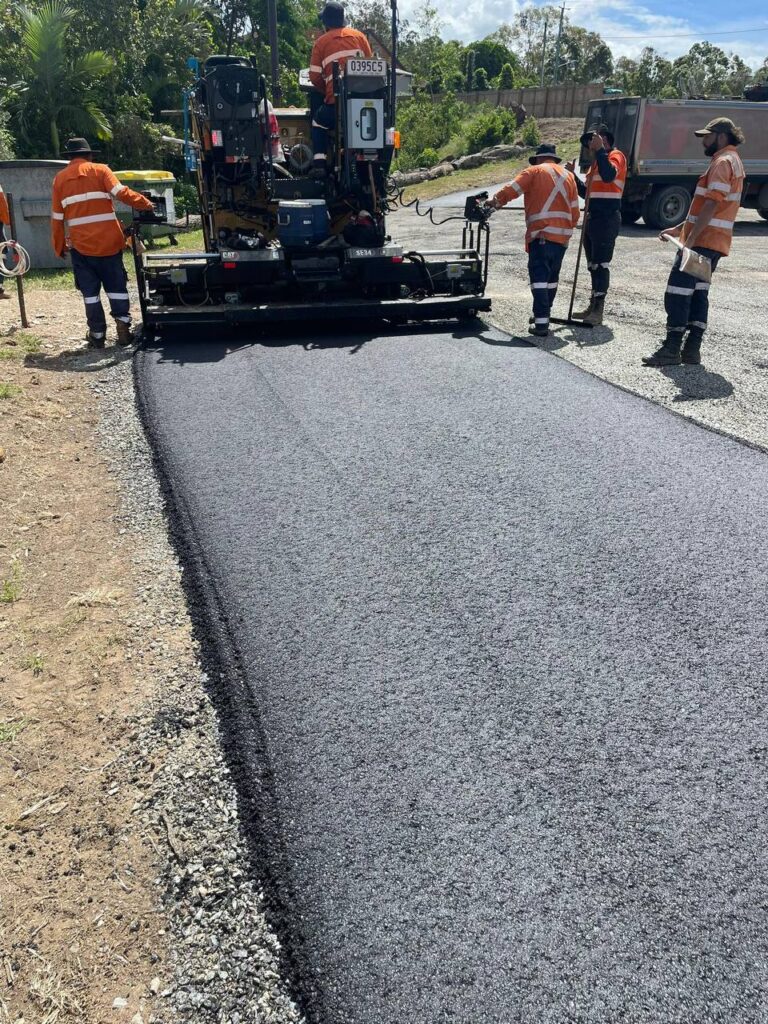
A road should provide a consistent surface that supports regular vehicle movements while allowing rainfall to drain away effectively. However, as a pavement ages, certain sections can begin to sink or develop shallow depressions. These low spots may initially seem like minor irregularities, but they can indicate problems with the road surface, underlying base or drainage.
Low spots are particularly noticeable after rainfall, when water collects in depressions rather than flowing away. Over time, these areas can become more vulnerable to cracking, potholes and further settlement, especially where vehicles repeatedly travel across the affected sections.
For property owners and businesses in Redcliffe, QLD, understanding why low spots develop is an important step towards maintaining a stable and dependable road. At Redcliffe Surfacing Solutions, we assess uneven pavements to identify whether the problem requires grading, localised repairs, resurfacing or more substantial preparation.
What Are Low Spots in a Road?
Low spots are sections of pavement that sit below the intended road profile. They can appear as shallow depressions, sunken patches, wheel ruts or larger uneven areas.
Some develop gradually through repeated traffic loading, while others result from weaknesses in the underlying pavement.
A low spot is not necessarily a sign that the entire road has failed. However, its location, depth and rate of development can provide useful information about the condition of the pavement.
Common warning signs include:
- Water collecting in isolated sections after rainfall
- Depressions forming along regular wheel paths
- Uneven transitions between pavement sections
- Sunken areas around previous repairs
- Cracking surrounding a depression
- Increasingly rough vehicle movements
- Potholes developing in low areas
The important consideration is whether the problem is limited to the surface or caused by movement deeper within the pavement structure.
1. Weak or Poorly Compacted Road Base
One of the most common reasons low spots develop is insufficient support beneath the road surface.
Asphalt and bitumen surfaces depend on the prepared pavement layers underneath them. These supporting materials distribute vehicle loads and help maintain a consistent road profile.
If the base contains weak or inadequately compacted sections, it may gradually compress or move under repeated traffic.
How Does Poor Compaction Cause Settlement?
When pavement material is placed, it needs to be compacted appropriately to create a stable foundation.
If sections remain insufficiently compacted, vehicle loading can cause the material to consolidate further.
As the supporting layer settles, the asphalt or bitumen surface above it can also sink.
This may create a localised depression even when the surrounding road remains relatively level.
Simply filling the depression with additional asphalt may improve its appearance, but it will not necessarily correct the underlying weakness.
Where base instability is present, the affected section may need to be rebuilt and compacted before the finished level is restored.
2. Repeated Vehicle Loading
Roads experience continuous pressure from vehicles travelling across the pavement.
Over time, repeated loading can contribute to deformation, particularly where the existing pavement is not adequately supported or is carrying traffic beyond its intended capacity.
The effects are often concentrated in predictable locations.
These include:
- Regular wheel paths
- Entrances
- Turning areas
- Locations where vehicles brake
- Frequently used access routes
- Sections carrying heavier vehicles
Why Do Wheel Paths Become Depressed?
Vehicles tend to follow similar paths across a road.
This concentrates loading in relatively narrow sections of pavement.
Where the asphalt or supporting materials deform under repeated loading, wheel ruts can begin to develop.
As rutting progresses, the road becomes uneven and water may collect within the depressed wheel paths.
The appropriate repair depends on whether deformation is occurring primarily within the asphalt layer or deeper in the supporting pavement.
3. Water Penetrating Beneath the Road Surface
Water can contribute significantly to the development of low spots.
When rainfall enters through cracks, potholes or damaged pavement edges, it may reach the underlying materials.
Depending on the pavement construction, excess moisture can weaken the support provided by these layers.
Under repeated vehicle loading, weakened sections can begin moving or settling.
How Water Damage Can Become a Repeating Problem
Once a low spot develops, it may begin collecting rainfall.
If the surface contains cracks or other openings, this water can penetrate further into the pavement.
The supporting material may then become increasingly vulnerable to movement, allowing the depression to deepen.
This can create a continuing pattern of:
- Water collecting in a low area
- Moisture entering through existing defects
- Supporting material losing stability
- Traffic causing additional movement
- The depression becoming deeper
Correcting the surface without addressing the water-related weakness may allow the problem to return.
4. Poor Drainage and Incorrect Road Levels
A road needs an appropriate profile to direct rainfall away from the travelled surface.
If the pavement was originally constructed with insufficient falls, or its shape has changed through wear and settlement, water may remain in particular areas.
Poor drainage does not always cause settlement directly, but it can contribute to the deterioration that eventually produces low spots.
Why Is Road Grading Important?
Grading establishes the shape and levels of the road.
A properly prepared pavement should have a profile suited to its location, intended use and drainage requirements.
Where the supporting pavement remains stable, grading can help correct minor irregularities and restore appropriate surface falls.
However, grading alone may not be sufficient where low spots are caused by deeper structural movement.
A professional assessment helps distinguish between incorrect surface levels and actual pavement failure.
5. Deterioration Around Existing Potholes
Potholes can contribute to uneven pavement when they are allowed to deteriorate.
As material breaks away, the damaged area becomes progressively deeper.
Water may collect within the opening, while vehicle tyres continue placing pressure on the surrounding edges.
If the supporting material also becomes unstable, the affected area can expand beyond the original pothole.
Why Proper Pothole Preparation Matters
A lasting pothole repair depends on understanding how deeply the deterioration extends.
Where damage is shallow and the supporting pavement remains sound, localised repair may be appropriate.
Where the base has weakened, the damaged material may need to be removed and the section rebuilt before the surface is restored.
Simply placing material into an unstable opening may leave the cause of the depression unresolved.
6. Settlement Around Previous Road Repairs
Low spots can sometimes develop where a road has previously been excavated or repaired.
These areas may contain material that was replaced during earlier work.
If the reinstated pavement was not adequately prepared or compacted, settlement can occur as traffic continues using the road.
A sunken repair may become noticeable because the surrounding original pavement remains at its previous level.
Signs of settlement around repairs include:
- A patch sitting lower than the surrounding road
- Cracking along repair edges
- Water collecting over the repaired section
- Uneven transitions
- Recurring deterioration in the same location
The repair should be assessed to determine whether the settlement is confined to the surface or extends into the reinstated supporting layers.
7. Pavement Ageing and General Deterioration
Roads gradually change as they experience traffic and environmental exposure.
Over time, existing cracks may widen, surface materials may deteriorate and older repairs may begin showing signs of wear.
Although ageing alone does not necessarily cause settlement, deterioration can make the pavement more vulnerable to water penetration and structural weakness.
Low spots may develop where these problems combine with repeated traffic loading.
This is why an older road should be assessed as a complete pavement rather than focusing solely on the visible depression.
8. Erosion of Supporting Material
Water movement can sometimes remove material from beneath or alongside a pavement.
Where erosion reduces support, sections of the road may begin to settle or break away.
This can be particularly relevant around damaged edges, poorly drained areas or sections affected by concentrated water flow.
Signs That Erosion May Be Contributing
Warning signs can include:
- Material washing away from road edges
- Small channels forming alongside the pavement
- Cracking near unsupported sections
- Depressions close to drainage paths
- Loose material collecting after rainfall
- Localised settlement near eroded areas
Where erosion is present, restoring the road surface without addressing the loss of supporting material may not provide a dependable result.
Why Should Low Spots Be Addressed Early?
A shallow depression may not initially interfere significantly with vehicle access.
However, low spots can become more problematic as they deepen or begin collecting water.
Potential consequences include:
- Increasingly uneven vehicle movements
- Standing water
- Additional cracking
- Pothole formation
- Progressive rutting
- Deterioration of pavement edges
- Further weakening of the road base
Early assessment can help determine whether the problem is still relatively localised or whether deterioration has progressed into the supporting pavement.
The objective is to identify the cause before additional damage develops.
Can Road Grading Correct Low Spots?
Grading can be effective where low spots are primarily caused by an uneven road profile and the supporting material remains stable.
For example, a road containing shallow depressions and displaced surface material may benefit from reshaping.
Professional grading can help:
- Restore appropriate levels
- Redistribute suitable material
- Improve surface consistency
- Establish drainage falls
- Correct minor irregularities
- Prepare the pavement for further surfacing
However, grading should not be used as a substitute for repairing unstable pavement.
If a low spot has developed because the base is moving or settling, the affected section may need deeper preparation before grading can restore a dependable profile.
When Is Localised Pavement Repair Necessary?
Localised repair may be appropriate where a low spot is associated with a specific area of failed pavement.
This could include a sunken patch, damaged pothole repair or isolated section of unstable base.
Depending on the condition, the repair process may involve removing damaged material, preparing the supporting layers, rebuilding the affected section and compacting it to the required level.
The surrounding pavement should also be checked to ensure the repair connects appropriately with the existing surface.
A properly prepared repair aims to restore both the surface level and the support underneath it.
Can Asphalt Resurfacing Correct Uneven Roads?
Asphalt resurfacing may be suitable where the existing pavement remains structurally stable but has developed surface wear or relatively minor irregularities.
Before resurfacing, contractors should assess the cause of any depressions.
If low spots are associated with stable pavement and incorrect surface levels, suitable preparation and levelling may be incorporated into the resurfacing process.
However, a new asphalt layer should not simply be placed over significant settlement or unstable material.
Resurfacing Should Follow Proper Preparation
The quality of the finished surface depends on the condition of the pavement underneath.
Where necessary, failed areas should be repaired before resurfacing begins.
Drainage, transitions and surface levels should also be considered to avoid creating new areas where water can collect.
The objective is to produce a consistent finished surface supported by a stable foundation.
How Do Contractors Identify the Cause of Low Spots?
A professional pavement assessment considers more than the visible depth of a depression.
Contractors examine how the road is used, where the damage occurs and whether other signs of deterioration are present.
Important factors include:
- The location and size of low spots
- Whether depressions follow wheel paths
- Existing cracking and potholes
- Previous repairs
- Surface drainage
- Pavement edge condition
- Signs of settlement
- Base stability
- Vehicle loading and traffic patterns
These observations help determine whether grading, localised repairs, resurfacing or deeper pavement preparation is required.
Why Professional Road Preparation Matters
Correcting a low spot involves more than making the road appear level.
If the supporting pavement is unstable, surface levelling alone may provide only a temporary improvement.
Professional preparation considers the entire pavement structure, including the road base, compaction, drainage and finished surface levels.
At Redcliffe Surfacing Solutions, we assess road surfacing requirements in Redcliffe, QLD, with attention to the underlying causes of uneven pavement.
By identifying whether low spots are caused by surface irregularities, settlement, traffic loading or drainage problems, the appropriate repair and surfacing method can be selected.
How Can You Reduce the Likelihood of Low Spots Returning?
Preventing recurring depressions depends on addressing the conditions responsible for their development.
Important considerations include:
- Maintaining suitable drainage
- Repairing potholes before deterioration spreads
- Addressing cracks that allow water penetration
- Ensuring repaired areas are properly compacted
- Maintaining stable pavement edges
- Using appropriate road base materials
- Matching pavement preparation to expected traffic
- Assessing recurring settlement rather than repeatedly covering it
A road that has already developed structural weaknesses may require more substantial work before these measures can provide lasting benefits.
Conclusion
Low spots can develop across a road for several reasons, including weak or poorly compacted base material, repeated vehicle loading, water penetration, incorrect drainage levels, erosion and settlement around previous repairs.
Although some depressions are relatively minor surface irregularities, others indicate movement within the underlying pavement.
The most appropriate solution depends on identifying the cause. Grading may be suitable for correcting an uneven but stable road profile, while localised repairs, deeper preparation or asphalt resurfacing may be necessary where deterioration is more advanced.
For property owners and businesses in Redcliffe, QLD, Redcliffe Surfacing Solutions provides professional asphalt and bitumen surfacing, road grading and pavement preparation based on the existing condition of the site.
If your road is developing low spots, collecting water or becoming increasingly uneven, contact Redcliffe Surfacing Solutions to arrange an assessment and discuss the appropriate approach to restoring a stable and consistent surface.
Call us on: 07 3113 9873
Click here to find out more about Redcliffe Surfacing Solutions
Click here to complete our contact form and see how we can help with your driveway needs.